
Flu B symptoms usually include a sudden fever, chills, body aches, fatigue, a dry cough, sore throat, and headache. Children with flu B are also more likely than adults to develop stomach symptoms like nausea, vomiting, or diarrhea. Most cases resolve within 5 to 7 days, though a lingering cough or tiredness can stick around for another week.
Somewhere around hour six of the chills, most people ask the same question: is this just a bad cold, or is it actually the flu? If you’ve ever gone from “fine” to “flat on the couch” in the span of an afternoon, you already know how fast flu B symptoms can move. One minute you’re at your desk, the next you’re layering blankets and wondering why your joints ache like you ran a marathon you don’t remember signing up for.
Flu B is one of the two influenza strains responsible for most seasonal illness (the other being flu A), and while the two look almost identical on paper, the day-to-day experience of flu B has a few of its own quirks. This guide walks through what flu B symptoms actually feel like, how they show up differently in kids versus adults, how long you should expect to be down for, and the specific warning signs that mean it’s time to stop toughing it out and call a doctor.
What Is Flu B, Exactly?
Influenza viruses come in four types: A, B, C, and D. Type A and type B are the two that cause the seasonal flu outbreaks people actually notice each winter, while type C tends to be mild and type D mostly affects cattle, not people.
Flu B only infects humans, which is one of the reasons it doesn’t mutate quite as unpredictably as flu A (flu A can also infect birds and pigs, giving it more opportunities to change). That doesn’t make flu B “safer,” though. It can still knock you flat, and in kids especially, it can be just as rough as flu A, sometimes rougher.
Flu B also tends to show up a little later in the season than flu A, often peaking in late winter or early spring, which is why you might hear about a “second wave” of flu cases just as everyone thought the worst was over.
Common Flu B Symptoms
Flu B symptoms overlap heavily with flu A, which is exactly why a home test or a doctor’s visit is really the only way to know which one you actually have. Here’s the core symptom list most people experience:
- Sudden fever, often arriving within hours, sometimes climbing high enough to feel disorienting
- Chills and sweating, even when the fever hasn’t fully kicked in yet
- Body aches and muscle pain, frequently described as deep, aching, or “flu-like” in a way a cold never feels
- Fatigue, the kind that makes getting off the couch feel like a project
- Dry, nonproductive cough
- Sore throat
- Headache, ranging from a dull pressure to something more intense
- Nasal congestion or a runny nose (less prominent than with a cold, but still common)
What sets flu B apart, at least in tendency rather than rule, is a slightly higher likelihood of gastrointestinal symptoms, particularly in children. Nausea, vomiting, and diarrhea show up more often alongside flu B than they typically do with flu A in adults. That said, this is a pattern, not a guarantee. Plenty of people get flu B with zero stomach involvement, and plenty of flu A cases come with an upset stomach too.
Flu B Symptoms in Children
Kids tend to get hit harder by flu B than adults do, and their symptom picture often looks a bit different:
- High fevers that spike quickly, sometimes reaching levels that alarm parents more than they should (fever itself isn’t usually dangerous, but a fever paired with lethargy or trouble breathing is worth attention)
- More frequent vomiting and diarrhea compared to adult cases
- Irritability or unusual clinginess, especially in toddlers who can’t describe what they’re feeling
- Loss of appetite
- In some cases, ear pain from a secondary ear infection
Because young children can’t always tell you “my chest hurts” or “I feel dizzy,” parents often have to rely on behavior changes, like a baby who’s suddenly harder to console, or a school-age kid who goes unusually quiet, as an early clue that something’s off.
Flu B Symptoms in Adults
Adults generally experience flu B as a more classic respiratory illness: fever, aches, fatigue, cough, and sore throat, with GI symptoms being the exception rather than the rule. Most healthy adults describe it as similar to flu A in overall misery, just occasionally landing on the milder end of the spectrum, though that’s far from guaranteed, especially in adults over 65 or those managing a chronic condition.
Flu B vs. Flu A: Side-by-Side Comparison
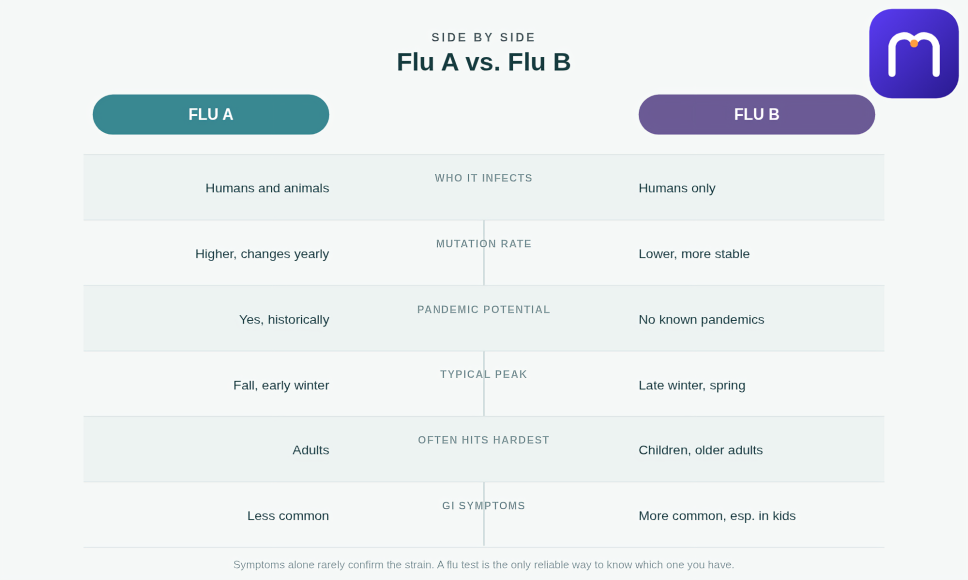
Since the two strains are so often confused, here’s how they typically stack up:
| Feature | Flu A | Flu B |
| Who it infects | Humans and animals (birds, pigs) | Humans only |
| Mutation rate | Higher, changes more year to year | Lower, more stable |
| Pandemic potential | Yes, historically responsible for pandemics | No known pandemic history |
| Typical timing | Peaks in fall/early winter | Often peaks later, into late winter/spring |
| Who’s hit hardest | Adults, more prevalent overall | Children, though adults are also affected |
| Severity pattern | Often more severe fevers/complications in adults | Can be more severe in young children and older adults |
| GI symptoms | Less common in adults | More common, especially in kids |
The honest takeaway here: symptoms alone can’t reliably tell you which strain you have. If it matters for your treatment plan (for example, if you’re weighing whether antiviral medication makes sense), a flu test is the only real way to know.
How Long Do Flu B Symptoms Last?
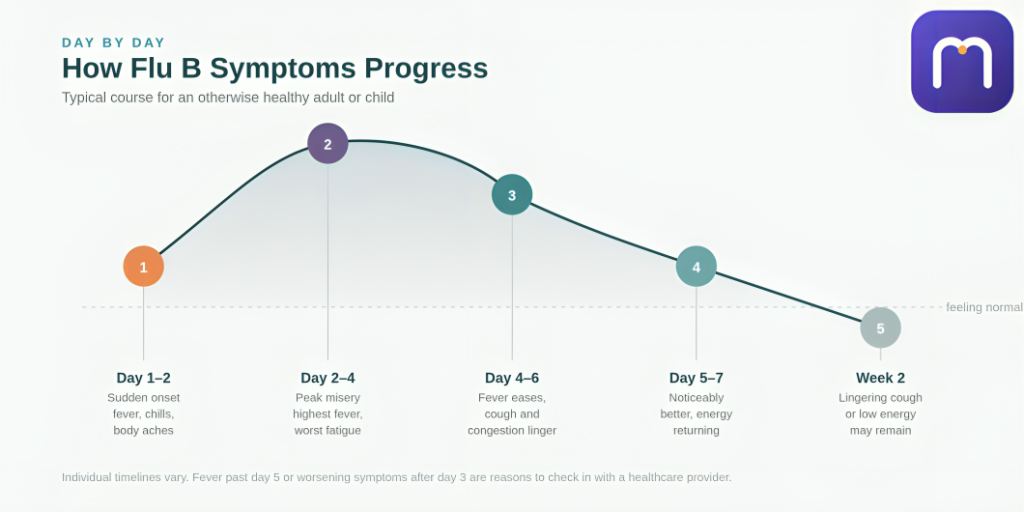
Most flu B cases follow a fairly predictable arc:
- Day 1 to 2: Sudden onset. Fever, chills, and body aches hit hard and fast, often within a few hours of the first “something feels off” moment.
- Day 2 to 4: Peak misery. Fever tends to be highest here, along with the most intense fatigue and aches.
- Day 4 to 6: Fever typically starts easing, though cough, congestion, and tiredness often linger.
- Day 5 to 7: Most people feel noticeably better, even if they’re not back to 100 percent.
- Week 2: A lingering cough or low energy can stick around, particularly in people with asthma, COPD, or other chronic respiratory issues.
In practice, if you’re still running a real fever past day 5, or your symptoms seem to be getting worse instead of better after day 3, that’s usually the signal to check in with a healthcare provider rather than waiting it out.
How Long Is Flu B Contagious?
You can typically spread flu B starting about a day before you notice any symptoms, and you’ll likely remain contagious for another 5 to 7 days after symptoms begin. Kids and people with weakened immune systems tend to stay contagious longer, sometimes for a couple of weeks.
A simple rule many people use: stay home until you’ve been fever-free for at least 24 hours without relying on fever-reducing medication like acetaminophen or ibuprofen to mask it.
Flu B Testing: Why It’s Not Always Straightforward
One detail that rarely gets mentioned: rapid antigen flu tests, the kind used in urgent care and at-home kits, can sometimes be less sensitive to flu B than to flu A. That means a negative rapid test doesn’t always rule out flu B completely, especially if you’re tested very early or very late in the illness. If your rapid test comes back negative but your symptoms strongly suggest flu, and especially if you’re in a higher-risk group, a more sensitive PCR-based test at a clinic can give a clearer answer.
Testing options generally include:
- Rapid antigen tests, fast results but somewhat lower accuracy for flu B specifically
- Rapid molecular assays, a step up in accuracy, still relatively quick
- RT-PCR lab testing, the most accurate option, typically used in hospitals or for higher-risk patients
Treating Flu B Symptoms at Home
For most otherwise healthy people, flu B is managed at home rather than in a clinic. A few things that genuinely help:
- Rest. Not glamorous advice, but it’s the single biggest factor in recovery time.
- Hydration. Water, broth, and electrolyte drinks help offset fluid loss from fever and sweating.
- Fever and pain relief. Acetaminophen or ibuprofen can ease aches and bring fever down to a more tolerable level (avoid aspirin in children with flu-like illness, due to its association with Reye’s syndrome).
- Cough support. Warm liquids, honey (for anyone over age 1), or an over-the-counter cough suppressant can take the edge off a persistent cough.
- Antiviral medication, such as oseltamivir, when prescribed early (generally within 48 hours of symptom onset), can shorten the illness and reduce the risk of complications, particularly for people in higher-risk groups.
Antibiotics won’t help. Flu B is caused by a virus, and antibiotics only work on bacterial infections, so unless a secondary bacterial infection develops, they’re not part of the picture.
When to Seek Medical Care
Most flu B cases don’t need a doctor’s visit, but certain signs mean it’s time to get evaluated rather than wait it out:
- Difficulty breathing or shortness of breath
- Persistent chest pain or pressure
- Sudden dizziness, confusion, or difficulty waking up
- A fever that won’t come down despite medication, or one that returns after initially improving
- Signs of dehydration (very little urination, dry mouth, dizziness when standing)
- Symptoms that improve and then suddenly get worse again (this pattern can point to a secondary infection like pneumonia)
People at higher risk of complications, including young children, adults 65 and older, pregnant individuals, and anyone with a chronic condition like asthma, diabetes, or heart disease, should generally have a lower threshold for reaching out to a provider rather than waiting to see if things improve on their own.
Preventing Flu B
There’s no way to guarantee you’ll dodge flu B entirely, but a few habits meaningfully lower the odds and reduce severity if you do get sick:
- Annual flu vaccination. The seasonal flu shot is formulated to cover both influenza A and B strains, and while it won’t prevent every case, it’s widely considered effective at reducing severity and complication risk.
- Hand hygiene. Regular handwashing remains one of the simplest, most effective habits against flu spread.
- Avoiding close contact with anyone actively sick, when possible.
- Covering coughs and sneezes, ideally into an elbow rather than a hand.
- Disinfecting shared surfaces, especially doorknobs, phones, and keyboards during flu season.
It’s also worth knowing that having flu A doesn’t protect you from flu B, or vice versa, since your immune system builds antibodies specific to each strain. That’s part of why it’s genuinely possible, if uncommon, to catch both in the same season.
Read More: https://muzzelo.com/buck-teeth/
FAQs
What are the first signs of flu B?
The earliest signs are usually a sudden fever, chills, and body aches that come on within hours, often followed by fatigue, headache, and a dry cough.
Is flu B worse than flu A?
Not necessarily. Flu A tends to cause more severe illness in adults, while flu B can hit young children and older adults harder. Severity really depends more on the individual’s age and health than on which strain they have.
How long does flu B last?
Most cases run about 5 to 7 days, with a lingering cough or fatigue sometimes continuing into a second week.
Can you have flu B without a fever?
Yes. While fever is common, some people, particularly older adults or those who are immunosuppressed, can have flu B without a noticeable fever.
Is flu B contagious before symptoms start?
Yes, you can spread flu B roughly a day before symptoms appear, which is part of why it moves through households and schools so quickly.
Can you get flu A and flu B at the same time?
It’s possible, though uncommon. Because the two strains are different, having antibodies against one doesn’t protect you from the other.
Does the flu shot protect against flu B?
Yes. Seasonal flu vaccines are formulated to cover both influenza A and B strains circulating that season.
When should you see a doctor for flu B?
See a doctor if you have trouble breathing, chest pain, a fever that won’t break, confusion, signs of dehydration, or symptoms that improve and then suddenly worsen.
Final Thoughts
Flu B rarely announces itself politely. It tends to arrive fast, hit hard for a few days, and then loosen its grip gradually, leaving a cough or low energy as the last things to go. Knowing the pattern, the sudden fever, the aches, the possibility of stomach symptoms in kids, makes it a lot easier to tell when you’re dealing with a routine case you can ride out at home versus one that needs a doctor’s attention.
If your symptoms match what’s described here and you’re not in a high-risk group, focus on rest, fluids, and symptom relief for the first few days. If anything on the warning-sign list shows up, or symptoms simply aren’t improving on the timeline you’d expect, don’t wait it out. A quick call to your doctor or a same-day urgent care visit can catch complications early and get you back on your feet faster.